Members’ Journal
Fire, Char and a Rosy Center: A Summer Leg of Lamb
Mary’s Blue Hour Bistro
Published
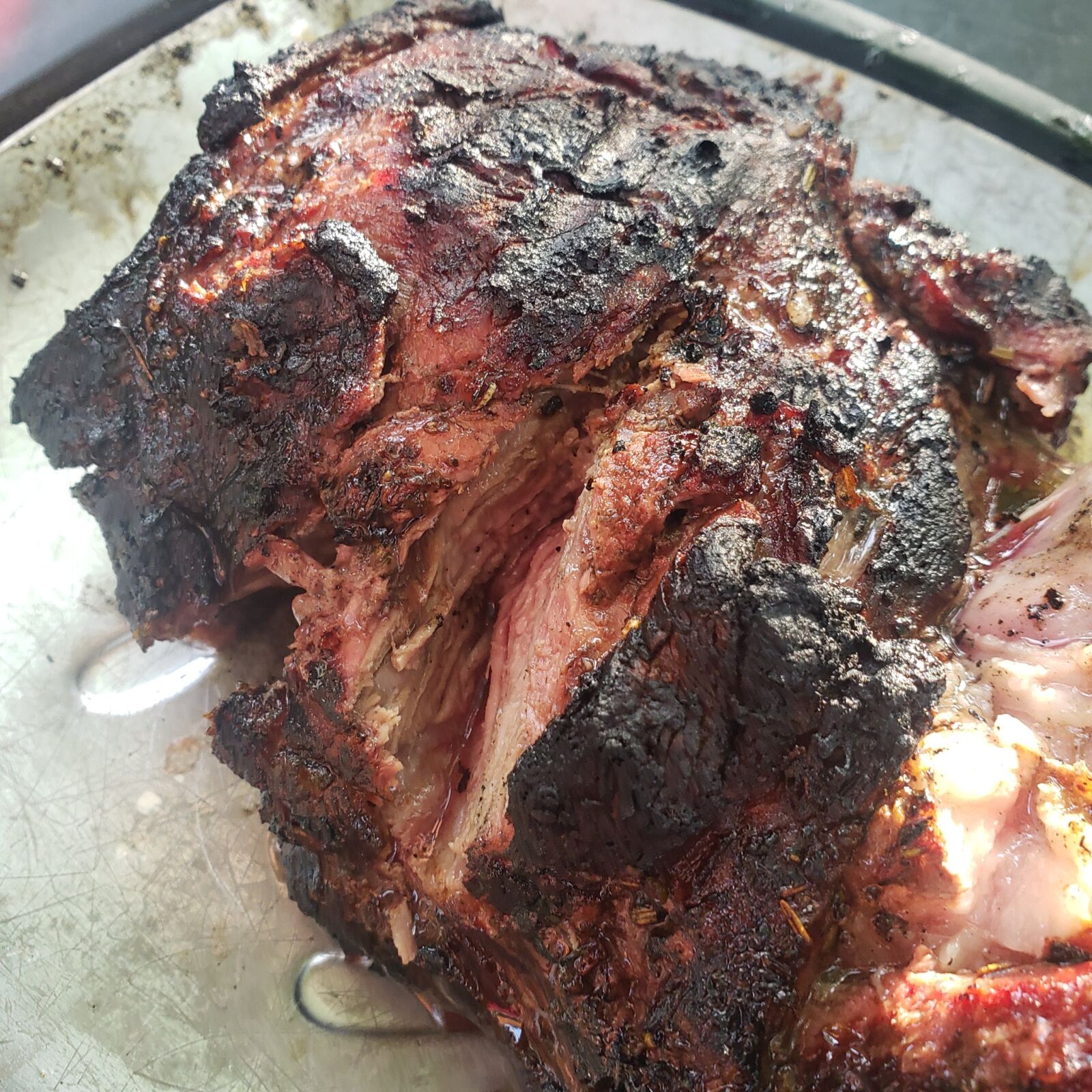
A butterflied leg of lamb anchors a Greek-inspired dinner, emerging from the charcoal grill deeply crusted and beautifully pink.
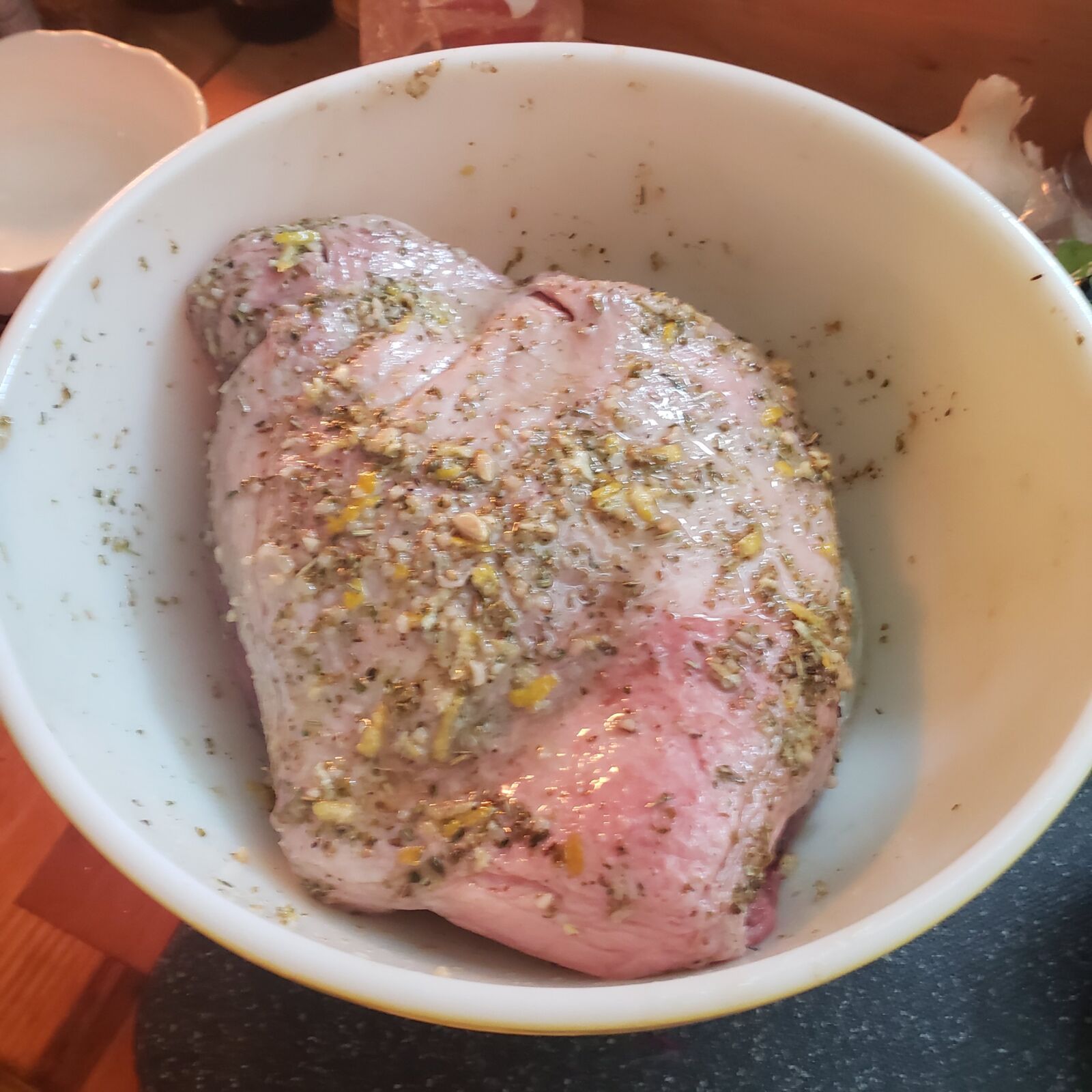
Dinner for a friend called for something special at Mary’s Blue Hour Bistro: a butterflied leg of lamb cooked over charcoal. The lamb first took on a bright, savory marinade of lemon, garlic, oregano and rosemary, visible in generous flecks across the meat before it reached the fire.
The grill offered an early lesson. The fat side darkened quickly over the hot coals, so the lamb was moved to the cooler zone to finish slowly beneath the lid. Because it had gone on slightly folded rather than completely flat, the thickest section needed extra time. A final check revealed the goal at last: warm pink meat beneath a boldly blackened exterior.
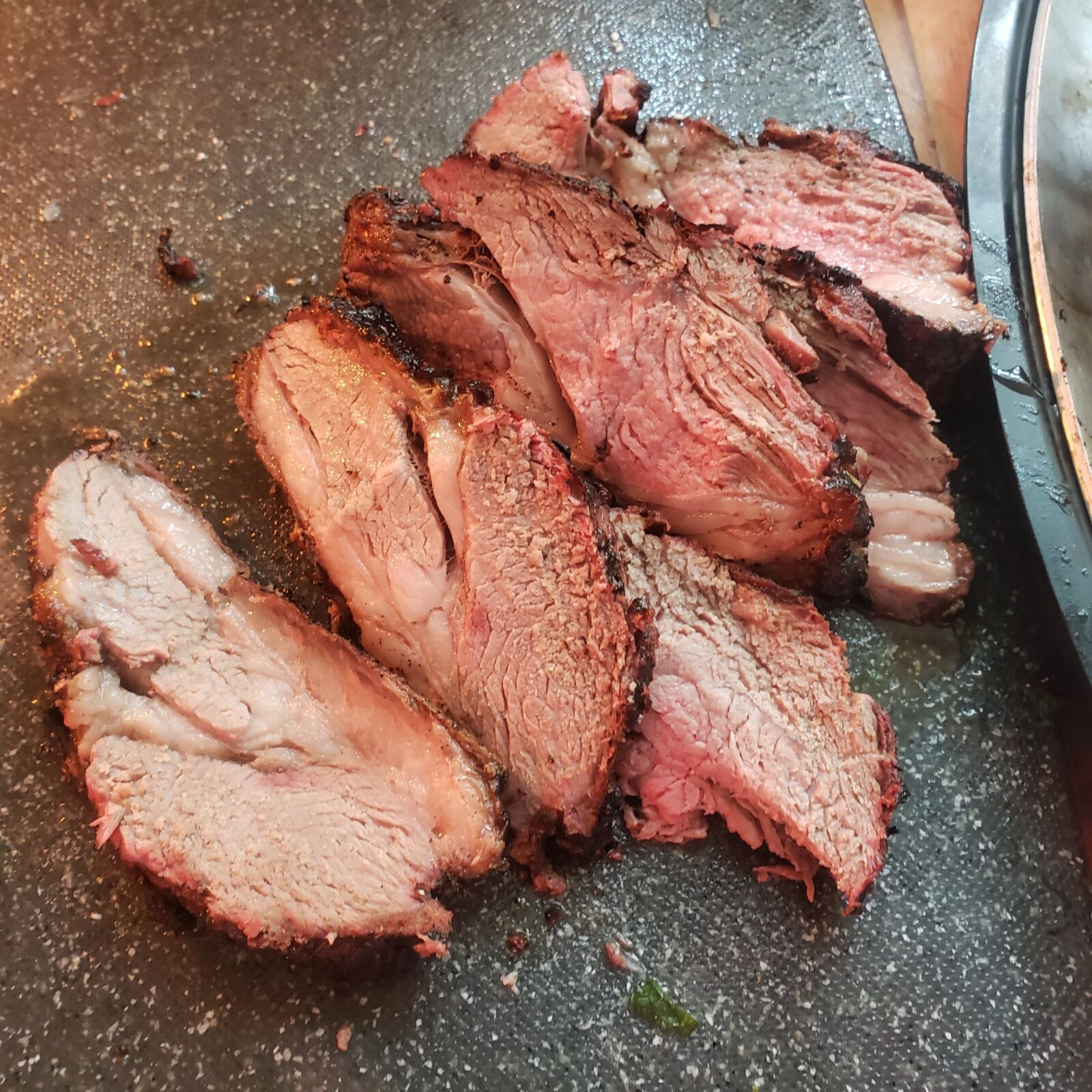
That dark crust was no flaw to disguise. It was part of the character of charcoal-grilled lamb—smoky and deeply browned against the juicy interior. Once rested and sliced across the grain, the varying shades offered pieces from rosy to more well done.
The lamb was joined by cool tzatziki and a crisp salad of romaine, cucumber, red onion, feta and Greek olives. The evening also left a clear plan for the next cookout: flatten the lamb thoroughly, moderate the opening fire and keep that glorious char.
Tonight’s Menu
Two-zone grilled butterflied leg of lamb with lemon, garlic, oregano and rosemary
Cool lemon-mint tzatziki
Romaine salad with cucumber, red onion, feta, Greek olives and Greek dressing
Open the Recipe Card
# Two-Zone Grilled Butterflied Leg of Lamb
*Grill about 35–45 minutes over a medium-hot two-zone charcoal fire; rest 10–15 minutes.*
## Ingredients
– 1 butterflied leg of lamb, about 3–4 pounds
– ¼ cup olive oil
– Juice and finely grated zest of 1 lemon
– 4 garlic cloves, minced
– 1 tablespoon dried oregano
– 1 teaspoon rosemary
– 1½ teaspoons kosher salt
– 1 teaspoon black pepper
## Steps
1. Mix the olive oil, lemon juice and zest, garlic, oregano, rosemary, salt, and pepper. Rub over the lamb, cover, and refrigerate.
2. Before grilling, open the lamb completely flat. If one area is dramatically thicker, make a shallow horizontal cut to open it further. Scrape or blot off loose garlic and zest so they do not blacken too quickly.
3. Prepare broad hot and cooler zones with medium-hot coals; let the top coals become lightly ashed.
4. Start the lamb fat-side down over the hot zone. Check after 2 minutes and flip once the crust is as dark as desired.
5. Move it to the cooler zone, close the lid, and finish indirectly. Point thick sections toward the coals and thin flaps away; turn only once if needed.
6. Check the thickest section: warm rosy pink with visible juices and springy flesh is ready; pale pink and fairly firm should come off immediately. Remove it slightly rarer than desired because it continues cooking while resting.
7. Rest whole and uncovered for 10–15 minutes. Slice thinly across the grain and spoon over the resting juices.
## Watch For
– Keep flare-ups under control and judge the sear by color rather than the clock.
– A smoky dark crust can stay; trim only patches that taste acrid or ashy.
– Never pour raw lamb marinade over the cooked meat.